
240Hz Refresh Rate Phone: What It Means & Is It Worth It? (2026 Guide)
Smartphone displays have improved a lot in recent years. Earlier, phones had 60Hz displays, then came 90Hz and 120Hz. Now, companies are working on 240Hz refresh rate phones, which promise ultra-smooth performance.
But what exactly is a 240Hz refresh rate, and do you really need it? Let’s understand everything in simple terms.
🔍 What is a 240Hz Refresh Rate?
Refresh rate means how many times your phone screen updates in one second.
- 60Hz = 60 times per second
- 120Hz = 120 times per second
- 240Hz = 240 times per second
👉 So, a 240Hz display refreshes twice as fast as 120Hz, making everything look smoother.
⚡ How 240Hz is Different from 120Hz
Most smartphones today use 120Hz displays. A 240Hz display is a next-level upgrade.
📊 Comparison:
- 60Hz → Basic smoothness
- 120Hz → Very smooth (standard today)
- 240Hz → Ultra smooth (future tech)
👉 In theory, 240Hz provides:
- Faster animations
- Better scrolling
- Improved touch response
🎮 Benefits of 240Hz Refresh Rate 
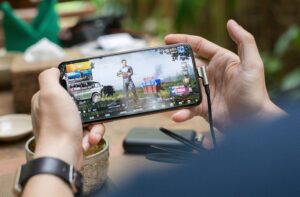
🎯 1. Super Smooth Gaming
For gamers, 240Hz can offer:
- Faster response time
- Better motion clarity
- Competitive advantage in fast games
👉 Especially useful in games like:
- BGMI
- Call of Duty
- Free Fire
⚡ 2. Faster Touch Response
Higher refresh rate often comes with:
- Lower input lag
- More accurate touch
👉 This makes gameplay feel more responsive.
🎨 3. Better Visual Experience
You get:
- Smoother scrolling
- Fluid animations
- Premium feel
👉 Everything looks more polished compared to 60Hz or even 120Hz.
🚫 Reality Check: Is 240Hz Really Useful?
Here’s the truth 👇
👉 Most apps and games do not support 240Hz yet
Even today:
- Many games are limited to 60Hz or 90Hz
- Only a few support 120Hz
👉 So 240Hz is more future-focused than practical right now
📱 Are There 240Hz Phones Available?
Currently:
- Most phones: 60Hz / 90Hz / 120Hz
- Gaming phones: up to 144Hz / 165Hz
👉 Some upcoming phones like OnePlus 16 are rumored to feature 240Hz displays
This could be a major upgrade over current flagship phones, which mostly use 120Hz displays.
🔋 Disadvantages of 240Hz Display
❌ 1. Higher Battery Consumption
- More refresh = more power usage
- Can drain battery faster
❌ 2. Limited Real-World Use
- Very few apps support it
- Difference may not be noticeable for normal users
❌ 3. Expensive Technology
- Likely to be available only in flagship phones
- Higher cost
🎯 240Hz vs 120Hz – Which is Better?
🏆 120Hz:
- Balanced performance
- Good battery life
- Widely supported
🚀 240Hz:
- Future technology
- Best for extreme gaming
- Limited support currently
👉 Final answer:
- For most users → 120Hz is enough ✅
- For hardcore gamers → 240Hz (future-ready) 🔥
🤔 Should You Buy a 240Hz Phone?
👉 YES, if:
- You are a serious gamer
- You want latest technology
- Budget is not an issue
👉 NO, if:
- You use phone for normal tasks
- You want better battery life
- You want value for money
Positive and Negative Sides of 240Hz Refresh Rate Phone
A 240Hz refresh rate phone is considered one of the fastest display technologies available in smartphones today, offering extremely smooth visuals and responsive performance. One of the biggest advantages of a 240Hz refresh rate phone is ultra-smooth scrolling and animations. Whether you are browsing social media, playing games, or navigating apps, everything feels faster and more fluid. A 240Hz refresh rate phone is especially beneficial for gamers, as it provides quicker screen response and can improve reaction time in competitive games. Another positive point is reduced motion blur, which enhances the overall viewing experience, making fast-moving content look clearer and sharper.
However, there are also some drawbacks to a 240Hz refresh rate phone. One of the main disadvantages is higher battery consumption, as running a display at such a high refresh rate uses more power compared to 60Hz or 120Hz screens. This can lead to faster battery drain during heavy usage. Another negative side is that not all apps and games support 240Hz, meaning you may not always experience the full benefit. Additionally, a 240Hz refresh rate phone is usually more expensive, as this feature is mostly available in premium devices. For regular users, the difference between 120Hz and 240Hz may not always be noticeable, making it less essential for everyday use.
🏁 Final Thoughts
240Hz refresh rate smartphones represent the next step in display technology. While they offer ultra-smooth performance and better gaming experience, their real-world use is still limited in 2026.
Most users will not notice a big difference compared to 120Hz, but for gamers and tech enthusiasts, 240Hz is an exciting upgrade.
👉 For now, 120Hz is practical, but 240Hz is the future.